
00
Pediatric Dermatology Understanding Pediatric Dermatology Pediatric dermatology is a branch of dermatology dedicated to diagnosing and treating skin, hair, and nail conditions in infants, children, and adolescents. Children's skin differs from adult skin in important ways: it is thinner, more sensitive, and still developing. This means that conditions can present differently and treatments must be carefully tailored to a child's…
00
Hand Rejuvenation Treatments Restore youthful, smoother, more even-toned hands Hands are one of the first places to show aging. Over time, the skin on the hands can become thinner, lose volume, and develop wrinkles and sun/brown spots often making the hands look older than the face. Hand rejuvenation treatments are designed to improve the look and quality of your hands…
00
Tinea infection (ringworm) treatment What is tinea infection (ringworm)? Tinea is a common fungal skin infection that causes a red, circular rash with clearer skin in the center. Despite the name, ringworm is not caused by worms. It is caused by dermatophyte fungi that live on the skin, hair, and nails.While usually not dangerous, it can be itchy, uncomfortable, and…
00
Alopecia Treatment Diagnosis and treatment for different types of hair loss Alopecia refers to hair loss from the scalp or other areas of the body. It can occur gradually or suddenly and may be temporary or long-term depending on the underlying cause. Hair loss may result from genetics, autoimmune conditions, stress, infections, medications, hormonal changes, or physical tension on hair…
00
Red Stretch Marks Red stretch marks, medically known as striae rubrae, are a common skin concern characterized by streaky lesions that appear on various parts of the body. They often manifest as reddish or purplish lines on the skin and are most commonly found on the abdomen, breasts, thighs, buttocks, and upper arms. Over time, these red marks may fade…
00
Telangiectasia Telangiectasia, commonly known as "spider veins," refers to small, dilated blood vessels that are visible near the surface of the skin or mucous membranes. These vessels, usually red, blue, or purple, can appear anywhere on the body but are most commonly seen on the face, legs, and chest. While generally harmless, telangiectasia can be a cosmetic concern for many…
00
Poikiloderma of Civatte Poikiloderma of Civatte Poikiloderma of Civatte is a chronic skin condition characterized by a combination of skin changes, including redness (erythema), pigmentation (hyperpigmentation or hypopigmentation), and a visible network of small blood vessels (telangiectasia). This condition typically affects the sides of the neck and the upper chest, sparing the shaded areas under the chin. Poikiloderma of Civatte…
00
Asphalt Tattoo Removal Understanding Asphalt Tattoos Asphalt tattoos occur when particles of asphalt or gravel become embedded in the skin, usually as a result of road accidents or falls on pavement. These particles can create dark, permanent marks resembling traditional tattoos. Aside from cosmetic concerns, embedded asphalt can cause skin irritation or inflammation if not properly addressed. Causes of Asphalt…
00
Sculptra Sculptra Aesthetic is an advanced, FDA-approved injectable treatment designed to restore facial volume and improve the appearance of deep lines and wrinkles. This innovative procedure stimulates your body's natural collagen production, gradually restoring a more youthful and refreshed appearance. Sculptra is an excellent option for those seeking a subtle, natural-looking rejuvenation without surgery. It's particularly effective for addressing age-related…
00
Vitiligo Skin Topicals and Steroids Vitiligo is a skin condition characterized by the appearance of white patches on various parts of the body. This occurs due to the loss of melanocytes, the cells responsible for skin pigmentation. Despite being non-contagious and typically painless, vitiligo can significantly impact an individual's quality of life due to its noticeable appearance. Treatment options for…
00
Silhouette InstaLift Treatment Silhouette InstaLift is an advanced, minimally invasive procedure designed to rejuvenate facial contours by lifting and repositioning sagging skin. The Silhouette InstaLift treatment involves the use of biodegradable sutures with bidirectional cones to lift and reposition the subdermal layer of the skin. It’s an excellent option for those seeking a middle ground between non-invasive treatments and traditional…
00
Rhinophyma Treatment Rhinophyma treatment is a specialized area in dermatology focusing on the treatment of rhinophyma, a skin disorder affecting the nose. This page is dedicated to providing comprehensive information about this condition and its treatment options to help you make well-informed decisions regarding your care. Rhinophyma is a form of rosacea, primarily affecting the nose and is characterized by…
00
Keloid Scar Treatment Keloid scar treatment is a key area of focus in dermatology. It involves minimizing and controlling the growth of keloid scars, raised skin areas that result from overactive scar tissues. This page aims to provide a comprehensive guide to the process, so you can make an informed decision on your treatment options. Keloid scars are not medically…
00
Hypertrophic Scar Treatment Hypertrophic scars result from an imbalance in the body's healing process after an injury, surgery, or burn. They are characterized by raised, red scars that don't extend beyond the initial injury site. While not dangerous, hypertrophic scars can cause discomfort, itchiness, and even pain. They may also be a cosmetic concern for many individuals. The primary goal…
00
Atrophic Scar Treatment Atrophic scars are sunken areas in the skin that occur when the underlying supportive structures - collagen and fat - are lost. Often a result of acne, chickenpox, trauma, or many other skin conditions, these scars appear as depressions in the skin. The key goal of atrophic scar treatment is to improve the skin's appearance by filling…
00
VENOUS LAKE - NECK Venous lakes are common benign skin lesions that appear on areas such as the ears, face, and neck. They are caused by dilated blood vessels and present as blue or dark purple, raised, and soft to the touch. They can vary in size from small to large. Many people may find venous lakes on the neck…
00
VENOUS LAKE - EAR Venous lakes are benign, slow-flow vascular lesions that commonly appear on the ears, but can also occur on the face, lips, and other parts of the body. They are caused by dilated blood vessels, typically appearing as blue or dark purple, raised, and soft to the touch. They can range in size from a few millimeters…
00
Basal cell carcinoma on the foot Accounting for greater than 90% of all skin cancers occurring among Americans, basal cell carcinoma (BCC) is the most prevalent type. While it rarely metastasizes (spreads) to other sites in the body, BCC may cause damage to surrounding tissues. BCCs form on and around the feet quite often, and it is therefore important to…
00
Basal cell carcinoma on the hand Accounting for greater than 90% of all skin cancers occurring among Americans, basal cell carcinoma (BCC) is the most prevalent type. While it rarely metastasizes (spreads) to other sites in the body, BCC may cause damage to surrounding tissues. BCCs form on and around the hands quite often, and it is therefore important to…
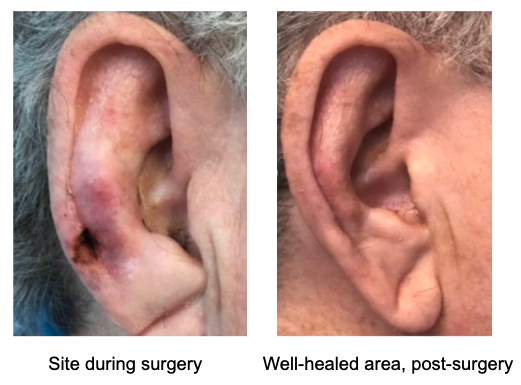
Basal cell carcinoma on the ear Accounting for greater than 90% of all skin cancers occurring among Americans, basal cell carcinoma (BCC) is the most prevalent type. While it rarely metastasizes (spreads) to other sites in the body, BCC may cause damage to surrounding tissues. BCCs form on and around the ears quite often, and it is therefore important to…