Poison Ivy Season: How to Identify, Prevent, and Treat a Rash
Learn how to recognize poison ivy, avoid urushiol exposure, wash safely after contact, relieve an itchy rash, and know when medical treatment is needed.

Published April 23, 2026
As spring arrives and outdoor activity increases across Northern Virginia, so does exposure to poison ivy, one of the most common causes of allergic skin reactions in the United States. The plant grows in backyards, parks, wooded areas, and along hiking trails throughout the Mid-Atlantic.
Learning how to identify poison ivy, avoid its oily resin, and respond promptly after contact can reduce the risk and severity of an itchy rash.
Why Poison Ivy Exposure Increases in Spring and Summer
Warmer weather brings more contact with vegetation, including poison ivy. Common sources of exposure include:
- New growth: Young spring leaves may be smaller, reddish, or more translucent, making the plant harder to recognize.
- Yard work and gardening: Pulling weeds, clearing brush, and mowing can bring skin into direct contact with the plant.
- Hiking and trail activities: Poison ivy often grows along trail edges, stream banks, and forest floors.
- Pets, clothing, and tools: Urushiol, the oily resin that causes the reaction, can remain on fur, fabric, gardening tools, and sports gear and transfer to skin later.
- Burning vegetation: Never burn poison ivy. Airborne urushiol particles can cause a dangerous reaction involving the eyes, lungs, and airway.
How to Identify Poison Ivy
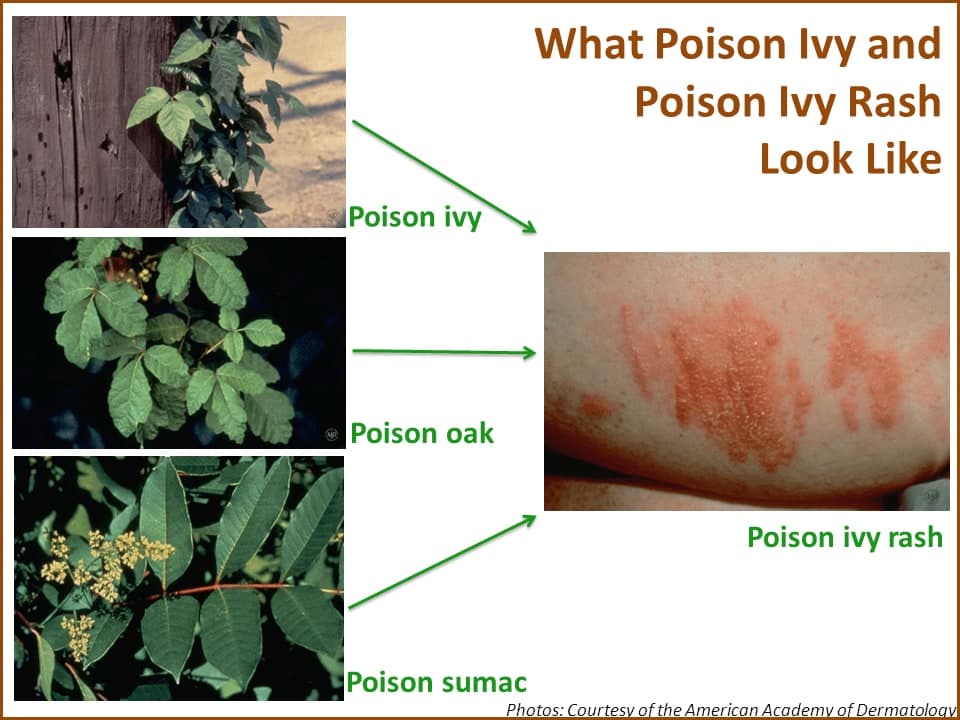
The familiar phrase “leaves of three, let it be” is a useful starting point. Poison ivy may grow as ground cover, a shrub, or a climbing vine. Typical features include:
- Three leaflets on each stem, with the middle leaflet often on a longer stalk
- Pointed leaf tips and edges that may be smooth, notched, or toothed
- Reddish new growth in spring
- Green leaves in summer that may look shiny or waxy
- Clusters of pale white or yellowish berries later in the season
Poison oak and poison sumac also contain urushiol and can produce a similar allergic rash. When you are unsure about a plant, avoid touching it.
How to Prevent a Poison Ivy Rash
Cover Exposed Skin
Wear long sleeves, long pants, gloves, socks, and closed shoes while gardening or moving through wooded and brushy areas. Avoid touching your face until you have washed your hands.
Wash Promptly After Possible Contact
If you may have touched poison ivy, wash exposed skin as soon as possible with soap and plenty of lukewarm water. Clean beneath the fingernails as well. Prompt washing can remove urushiol before it fully binds to the skin.
Clean Clothing, Tools, and Pet Fur
Remove clothing carefully, avoid touching the outside surfaces, and wash it separately according to its care instructions. Wear disposable gloves while cleaning shoes, tools, and other exposed items. Bathe pets that may have brushed against the plant, since urushiol can remain on fur even though most pets do not develop a rash.
Use Barrier Products Correctly
Barrier products formulated to help block urushiol may offer additional protection when used before outdoor activity. Follow the product label carefully, and remember that a barrier product does not replace protective clothing or prompt washing.
What Happens After Exposure
Urushiol can trigger allergic contact dermatitis. Symptoms usually begin within 12 to 72 hours, although timing varies based on prior sensitivity and the amount of exposure. Signs may include:
- Intense itching
- Red patches or streaks where the plant brushed the skin
- Swelling, especially around the face or eyes
- Fluid-filled blisters
- A rash that seems to appear in stages
The rash itself is not contagious, and fluid from the blisters does not spread it. New areas may appear later because different parts of the skin absorbed urushiol at different rates or because contaminated objects still carry the oil.
How to Relieve a Mild Poison Ivy Rash
- Apply cool, wet compresses for 15 to 30 minutes at a time.
- Try a colloidal oatmeal bath or calamine lotion to soothe itching.
- Avoid scratching, which can damage the skin and increase the risk of infection.
- Ask a pharmacist or clinician whether an over-the-counter corticosteroid or oral antihistamine is appropriate for you.
Do not apply topical antihistamines or anesthetic products unless a clinician recommends them, since they may cause additional irritation or allergic contact dermatitis in some people.
When to Seek Medical Attention
Seek urgent medical care for difficulty breathing after exposure to burning vegetation or swelling involving the mouth, tongue, or throat. Contact a clinician promptly if the rash:
- Covers a large area of the body
- Involves the face, eyelids, mouth, or genitals
- Causes severe swelling, itching, or sleep disruption
- Shows signs of infection such as increasing pain, warmth, pus, or fever
- Does not begin improving or continues to worsen
Moderate or severe reactions may require prescription treatment. A dermatologist can also determine whether a rash is poison ivy, another form of contact dermatitis, or a different skin condition.
Get Help for a Concerning Rash
Learn more about our care for rashes and skin reactions. If symptoms are severe, persistent, or difficult to identify, request a dermatology appointment at our McLean or Woodbridge office.