Contact Dermatitis: 6 Hidden Allergens That May Be Irritating Your Skin
A recurring itchy rash may come from nickel, fragrance, preservatives, rubber, beauty products, or topical medications. Learn how to identify and avoid common contact dermatitis triggers.

Published August 7, 2026
If you have developed an unexplained rash after switching lotions, wearing new jewelry, or trying a different laundry detergent, you may have experienced contact dermatitis. This common skin condition often appears as a persistent, itchy, dry, or irritated patch that seems to come from nowhere.
The cause is frequently something in an everyday routine: a fragrance, metal, preservative, cleaning product, or medication that you may have used for years. Understanding the two main types of contact dermatitis and identifying the trigger are the first steps toward lasting relief.
What Is Contact Dermatitis?
Contact dermatitis is inflammation caused by direct skin contact with a substance. Although the two main forms can look alike, they develop for different reasons.
Irritant Contact Dermatitis
Irritant contact dermatitis occurs when a substance physically damages the skin barrier. Common causes include soaps, solvents, frequent handwashing, wet work, harsh chemicals, and repeated friction. Anyone can develop this form after enough exposure, and symptoms often remain limited to the areas that had direct contact.
Allergic Contact Dermatitis
Allergic contact dermatitis is a delayed immune reaction. It develops after the body becomes sensitized to a specific allergen; once sensitization occurs, even a small exposure may trigger a rash hours or days later. The reaction can sometimes spread beyond the original contact area.
What Does Contact Dermatitis Look and Feel Like?
Symptoms vary with the cause, exposure, and location. Contact dermatitis may cause:
- Redness or discoloration
- Itching, burning, or tenderness
- Dry, cracked, scaly, or thickened skin
- Swelling
- Small bumps or fluid-filled blisters
- Oozing and crusting during a severe flare
The location often offers a clue. A reaction around the wrist may relate to a watchband, an earlobe rash may come from earrings, and eyelid irritation can result from products transferred by the hands rather than something applied directly to the eyelids.
Six Hidden Allergens to Watch For
1. Nickel
Nickel is one of the most common contact allergens. It may be present in earrings, necklaces, watchbands, belt buckles, zippers, eyeglass frames, keys, tools, and electronic devices. Reactions frequently appear on the earlobes, wrist, abdomen, or wherever metal touches the skin.
2. Fragrance
Fragrance ingredients occur in perfumes, lotions, soaps, shampoos, deodorants, cosmetics, and household products. Even an “unscented” product can contain a masking fragrance. People with a fragrance allergy should look specifically for products labeled fragrance-free rather than relying on the word unscented.
3. Preservatives
Preservatives prevent microbial growth in cosmetics, liquid soaps, shampoos, wipes, paints, and other water-based products. Methylisothiazolinone, formaldehyde-releasing preservatives, and related ingredients can trigger allergic contact dermatitis in sensitized people. Ingredient names vary, so a personalized avoidance list can be valuable after testing identifies an allergy.
4. Rubber and Latex Products
Gloves, elastic waistbands, shoe components, sports equipment, and medical devices may contain natural rubber latex or rubber-processing chemicals. The reaction may come from latex proteins or from additives used during manufacturing. A contact rash is different from an immediate latex allergy, which can cause hives, breathing difficulty, or anaphylaxis and requires urgent medical attention.
5. Hair and Nail Products
Paraphenylenediamine, often called PPD, is found in many permanent hair dyes and may cause a rash along the scalp, hairline, ears, face, or neck. Acrylates in gel, dip, and artificial nail products can affect the fingers and may also cause a rash on the eyelids or face after hand-to-face transfer.
6. Topical Medications
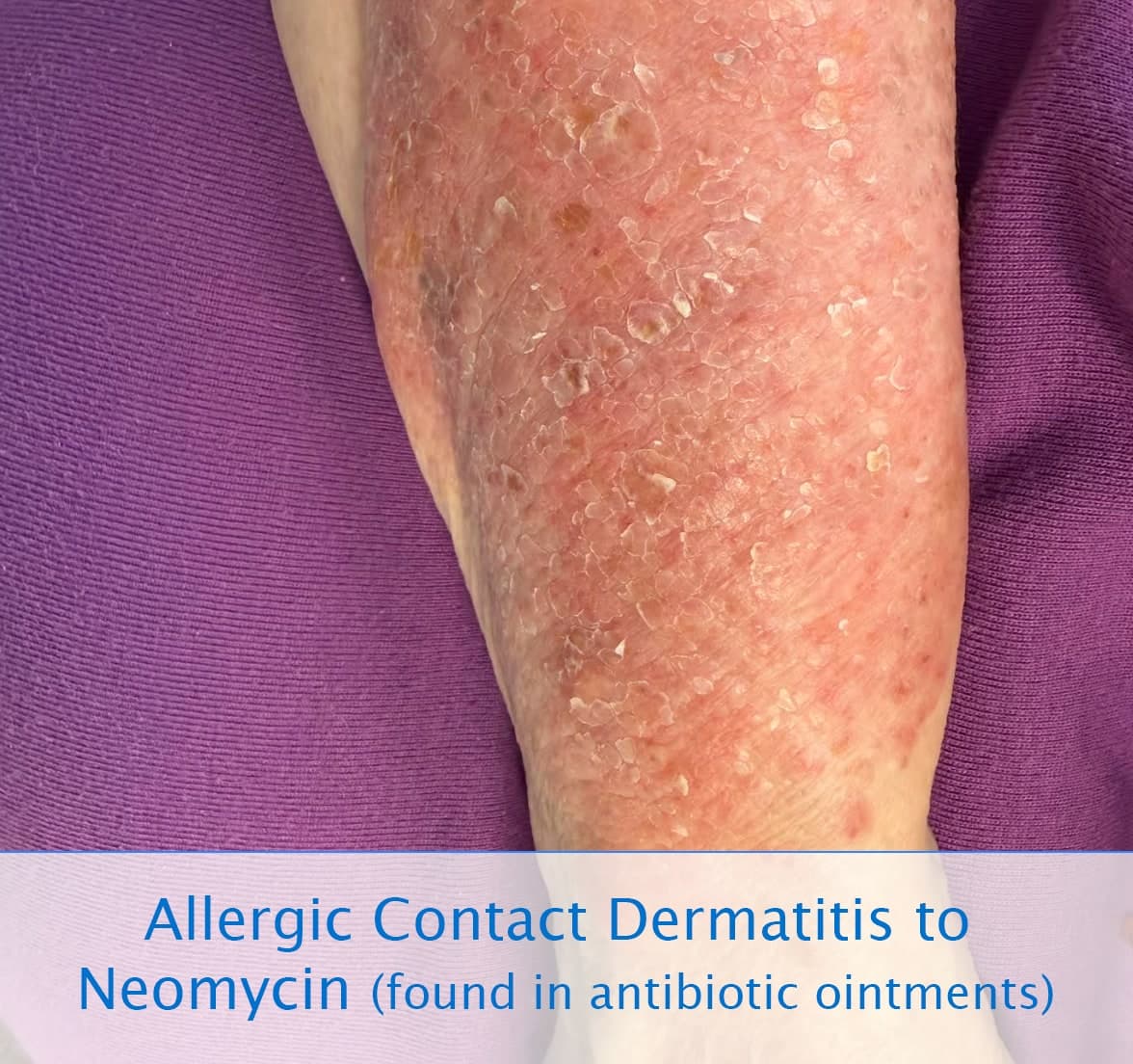
Products intended to treat the skin can sometimes become the source of a reaction. Neomycin and bacitracin in some antibiotic ointments are recognized contact allergens. If a treated area becomes increasingly itchy, red, scaly, or blistered rather than improving, stop self-treating and ask a clinician to evaluate it.
How Is Contact Dermatitis Diagnosed?
A dermatologist begins by examining the rash and reviewing its timing, location, occupation, hobbies, skin-care products, medications, and recent exposures. Bringing product containers or clear photos of ingredient labels can help.
When allergic contact dermatitis is suspected, patch testing may be recommended. Small amounts of common allergens are applied to the back under adhesive panels and left in place for a set period. The skin is then checked at scheduled visits for delayed reactions. Patch testing is different from a skin-prick test, which evaluates immediate allergies such as pollen or certain foods.
How to Manage and Prevent Flare-Ups
- Avoid the confirmed trigger: Eliminating contact with the responsible substance is the most effective long-term treatment.
- Read labels carefully: Learn all ingredient names related to your allergen and recheck labels because formulations can change.
- Repair the skin barrier: Use a fragrance-free moisturizer regularly, especially after washing.
- Choose gentle products: Use fragrance-free, dye-free cleansers and detergents and avoid unnecessary products during a flare.
- Protect your hands: Wear task-appropriate gloves for wet work or chemical exposure. Cotton liners can reduce sweat and friction inside protective gloves.
- Follow treatment instructions: A clinician may recommend a topical corticosteroid or another anti-inflammatory medication based on the location and severity of the rash.
Do not keep applying a product that appears to worsen the reaction. “Natural” and botanical products can also contain contact allergens.
When Should You See a Dermatologist?
Schedule an evaluation when a rash keeps returning, the cause is unclear, over-the-counter care does not help, or symptoms interfere with sleep, work, or daily activities. Prompt assessment is especially important for a reaction involving the face, eyelids, hands, genitals, or a large area of the body.
Seek urgent care for trouble breathing, swelling of the lips or tongue, widespread blistering or peeling, fever, severe pain, or signs of infection such as pus, warmth, or rapidly spreading redness.
Find the Cause of a Recurring Rash
Contact dermatitis can be frustrating, but identifying the exposure often makes long-term control possible. Learn more about our care for rashes and skin reactions and eczema and atopic dermatitis. If your rash is persistent or difficult to identify, request a dermatology appointment at our McLean or Woodbridge office.